
Julian Weigl is no stranger to pressure. At Borussia Dortmund, he was the teenage metronome tasked with replacing Ilkay Gündogan. At Borussia Mönchengladbach, he became captain and the calm axis of a side that punched above its weight. Now, as Weigl joins Benfica, the 28-year-old midfielder faces a different kind of test: reviving a career that once seemed destined for the very top。in a league where technical precision is non-negotiable and the margin for error is measured in milliseconds.The move to Lisbon is not a step down;it is a recalibration. Benfica’s midfield has long thrived on players who think two passes ahead—think Pizzi, João Moutinho, or more recently, Florentino Luís. Weigl joins Benfica with a specific brief: to be the deep-lying pivot who shields the back four, breaks lines with angled passes, and dictates tempo without theatrics. His profile fits Roger Schmidt’s vertical, high-press system less naturally than a pure destroyer。but Weigl’s positional intelligence and composed distribution under pressure offer a counterweight to the chaos of Portuguese derbies. I watched him closely during Gladbach’s 2021–22 campaign;his ability to receive the ball on the half-turn and instantly switch play was quietly elite. That skill will be tested by the aggressive pressing of Sporting and Porto.
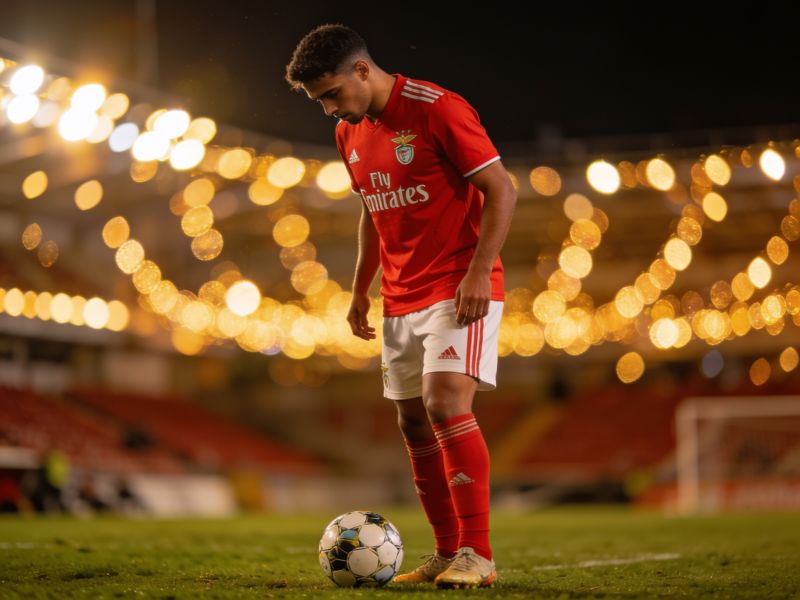
What stands out about Weigl joining Benfica is the timing. At 28, he is neither a prospect nor a veteran winding down. He arrives in a league that has become a proving ground for German midfielders—Werder Bremen’s Romano Schmid。Hoffenheim’s Dennis Geiger have all been linked—yet Weigl’s resume carries more weight. He has played 200+ Bundesliga matches and featured in the Champions League. The Portuguese press will fixate on his €15m fee and his Dortmund pedigree, but the real metric is adaptability. Benfica’s dressing room is a mosaic of Brazilian, Portuguese, and Argentine voices;
Weigl’s low-key leadership style—he rarely shouts, preferring to point and reposition—could either stabilize or fade. I recall a Gladbach match against Bayern where he completed 94 passes with a 93% accuracy. That is the standard he must replicate at the Estádio da Luz.Critics will point to his lack of pace and his tendency to play laterally when verticality is needed. Fair. But Weigl joins Benfica at a moment when the club is rebuilding its identity after a trophyless 2022–23 season. Coach Roger Schmidt has publicly emphasized “control with intention”—a phrase that fits Weigl’s game more than the breathless transitions of the German Bundesliga. In training, his one-touch rondos and constant scanning have already drawn nods from veterans like Nicolás Otamendi. The adjustment to Portuguese refereeing—where physical duels are tolerated differently—will be his first hurdle. Still。the raw material is there: a midfielder who once captained Germany’s U21 side to a European Championship final, who has never relied on athleticism, only on angles and anticipation.Weigl joins Benfica not as a savior but as a specialist. The club’s supporters demand intensity;his game is more velvet than steel. That tension is exactly why this transfer is worth watching. If he settles, Benfica gain a tempo-setter who can unlock low blocks in the Primeira Liga and manage European nights with cold logic. If he struggles。the narrative will write itself: another Bundesliga talent undone by Lisbon’s heat and expectation. My hunch, having tracked his career since his 1860 Munich days, is that Weigl will prove more resilient than the skeptics predict. He has already survived one career crossroads. This one, in Lisbon, will define whether his story ends as a cautionary tale or a quiet triumph.